Rainbow Road: Cedar Rapids Developer Reimagines Community on the Southwest Side
By Diamond Roundtree
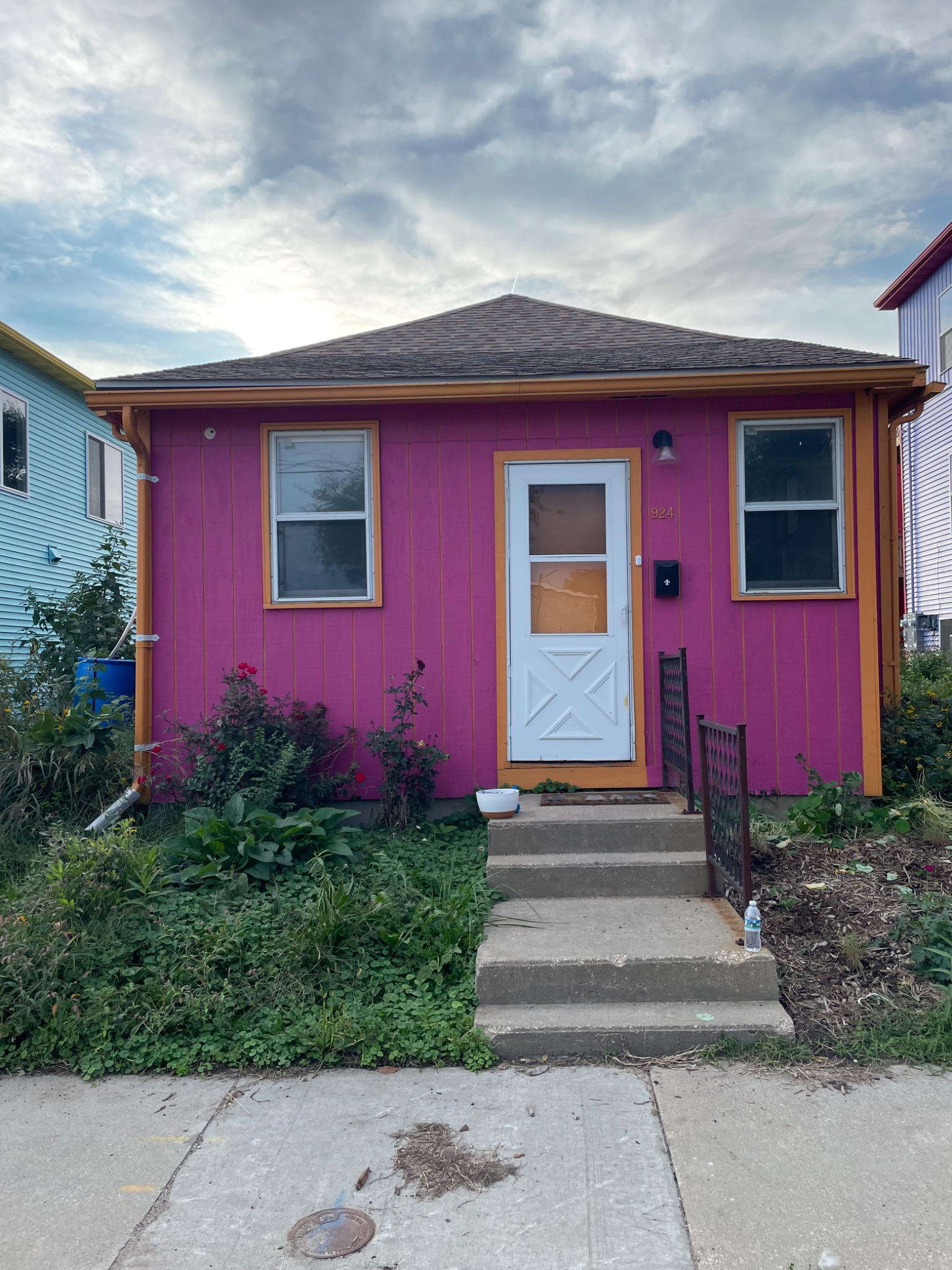
CEDAR RAPIDS, Iowa — Colorful homes, shared gardens and walkways connecting outdoor spaces are bringing a different vision of neighborhood living to Cedar Rapids’ southwest side.
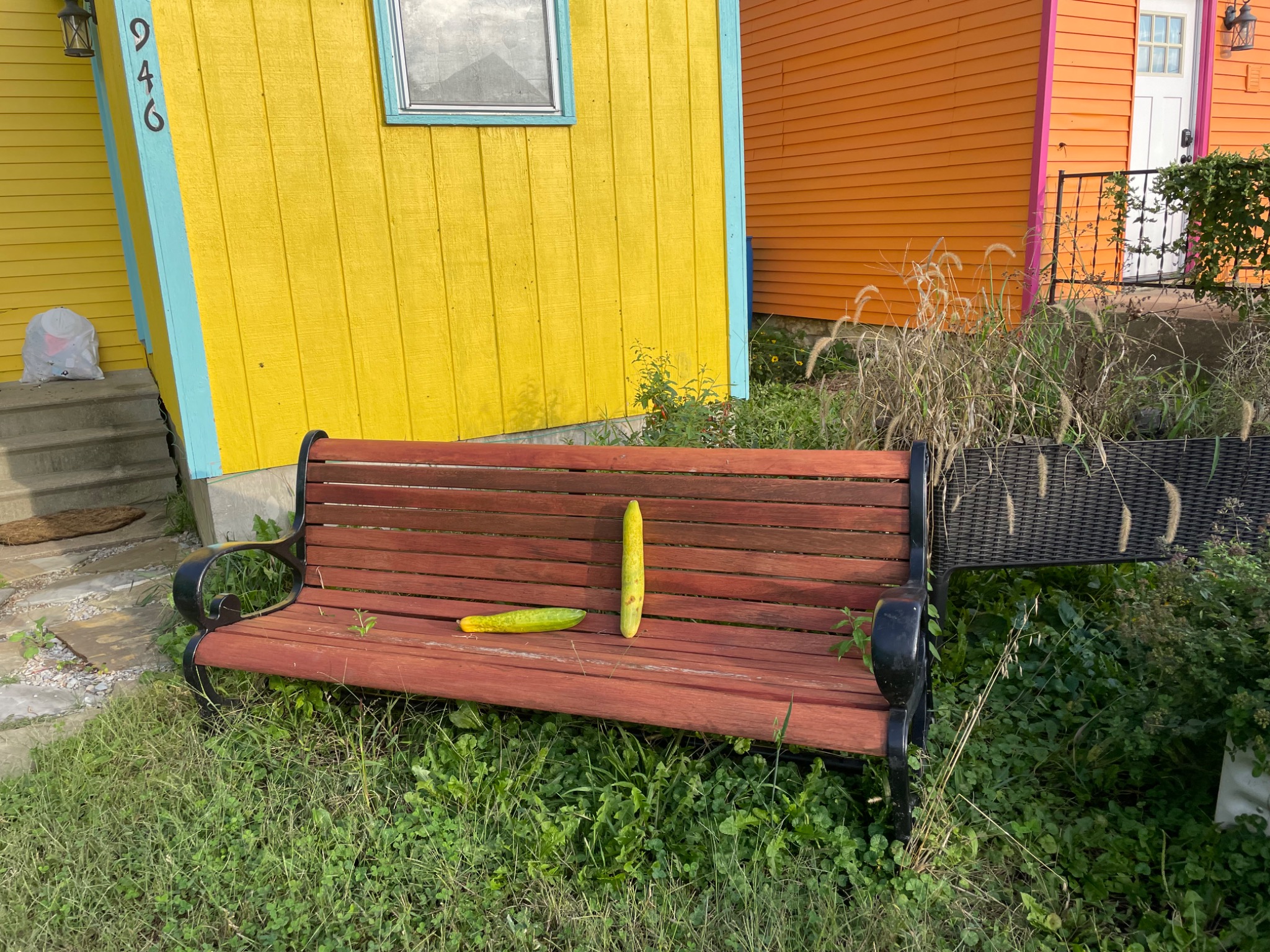
At 940 M St. SW, Rainbow Road is a project led by Eric Gutschmidt of Gutschmidt Properties. The development combines housing with shared outdoor spaces designed to encourage neighbors to interact and build connections.
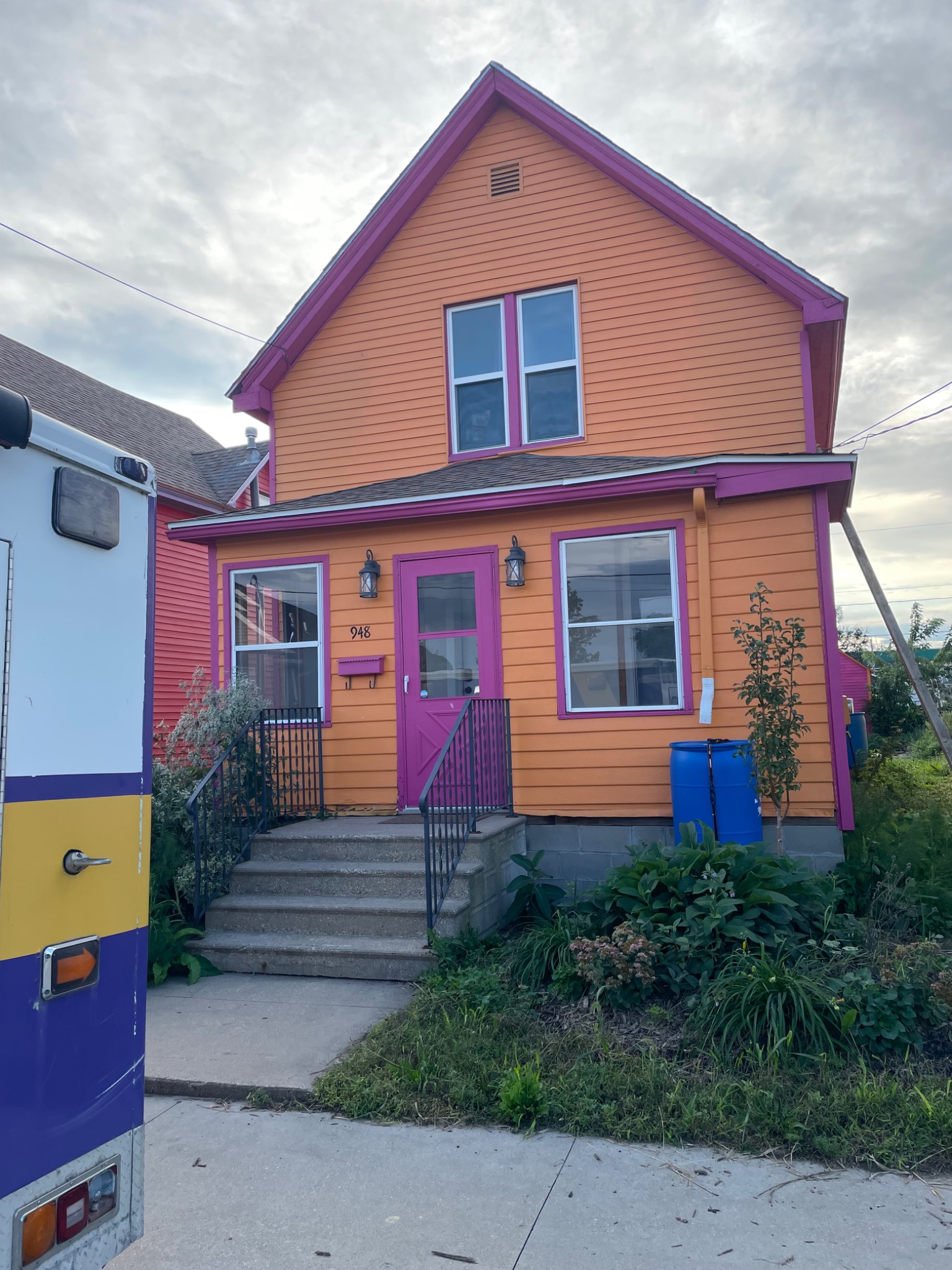
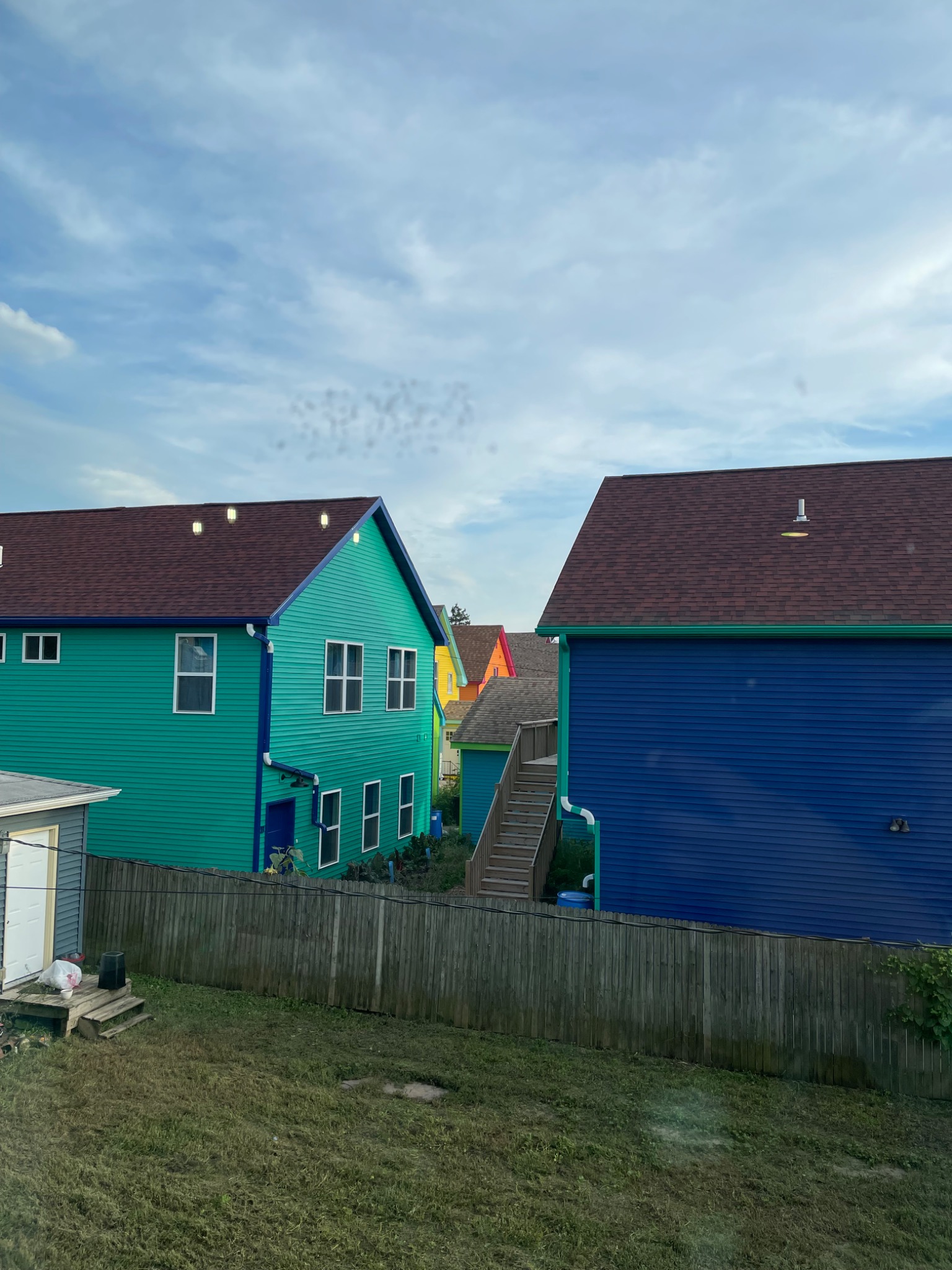
Visible from Interstate 380, the project features brightly colored homes, gardens and pathways that connect the property. Gutschmidt’s vision extends beyond building houses. He is experimenting with how the design of a neighborhood can influence the way people live and connect with one another.
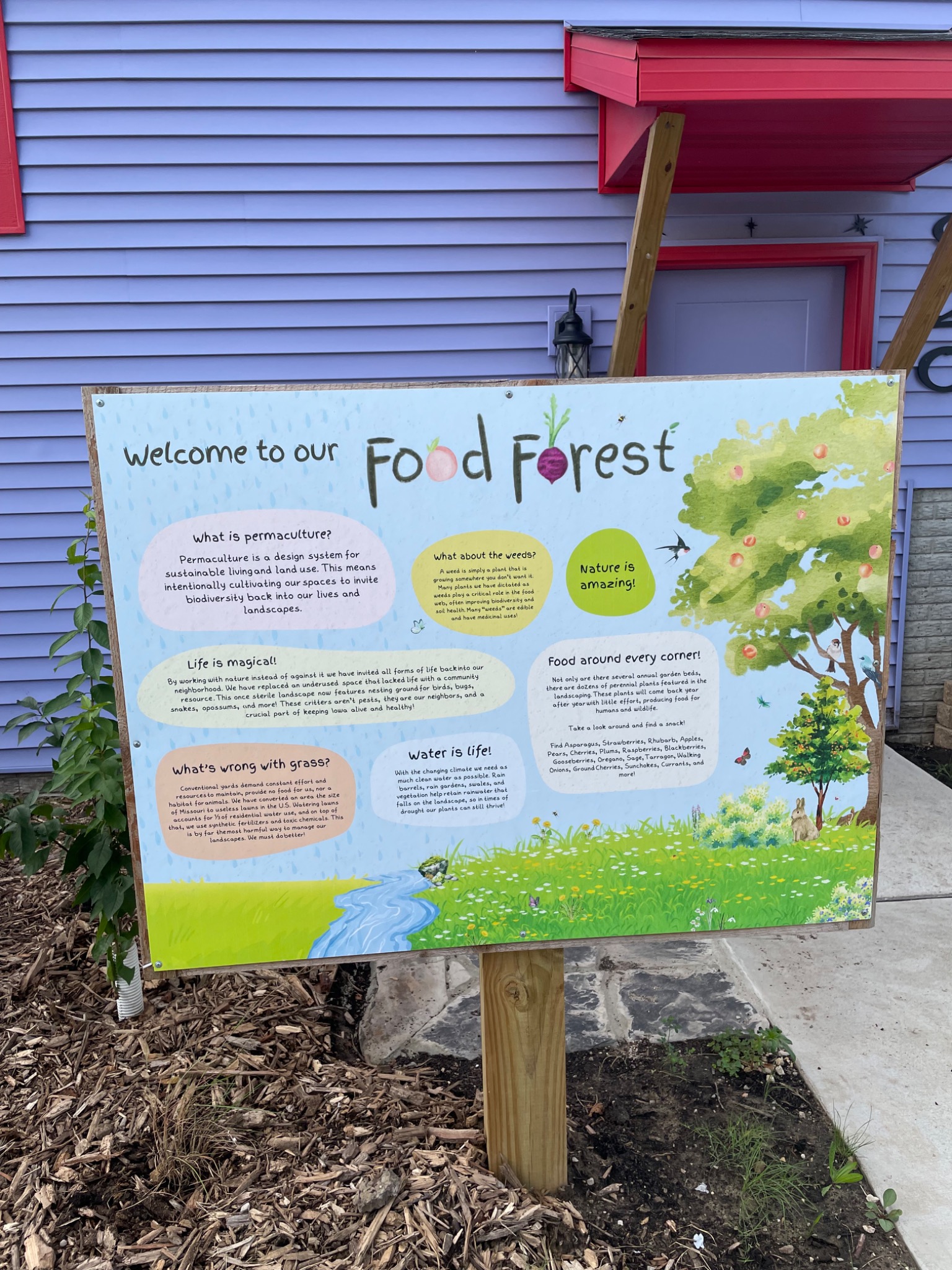
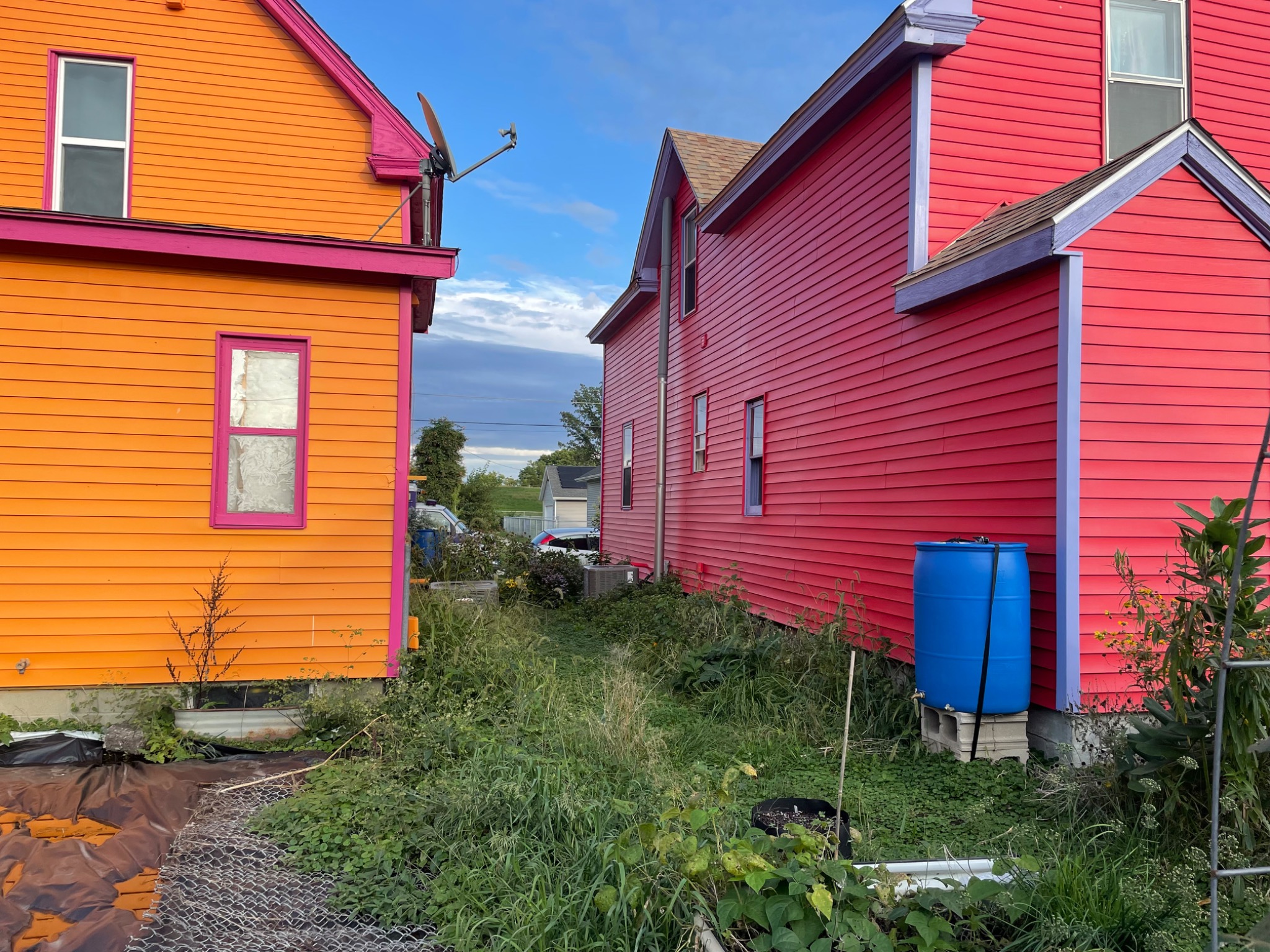
During a tour of the property, the vision came into view through the details. Colorful homes stood alongside gardens, while walkways led toward a community food forest. A sign welcomed visitors and explained the principles of permaculture, a design approach that works with nature to create sustainable, biodiverse spaces.
The garden and pathways offered a glimpse of how the development is intended to function beyond its individual homes: as a shared space where neighbors can gather, interact and build connections.
From property development to neighborhood design
Gutschmidt’s interest in real estate began with a goal to travel internationally. After attending Kirkwood Community College and the University of Iowa, he returned to Iowa following the 2008 flood.
To save money for travel, he worked two full-time jobs: one in demolition and another as a waiter at Buffalo Wild Wings. Within less than a year, he had saved enough to purchase his first triplex.
When tenants left the property, Gutschmidt began renovating it with help from a neighbor. As he acquired additional properties, he noticed that improving one home did not necessarily improve the surrounding neighborhood.
That realization led him to become involved in neighborhood association efforts and projects aimed at improving the broader community.
His work eventually included renovating historic homes with distinctive, colorful designs. Rainbow Road builds on that interest, combining housing with shared spaces intended to encourage interaction among residents.
Preserving the past while imagining what comes next
Around 2021, Gutschmidt acquired much of the 900 block of M Street after the children of former property owner Francis Becker decided to sell.
Rather than demolish the existing apartment buildings and start over, Gutschmidt chose to preserve them. He said the older structures carried materials, memories and craftsmanship worth keeping.
The project also includes newly built homes, each with different layouts, colors and configurations. Gutschmidt has emphasized the importance of designing homes around how people use them, including options that can accommodate roommates or different household arrangements.
“People live on the inside, not on the outside,” Gutschmidt said.
For him, functional interiors and thoughtful layouts matter as much as the exterior appearance.
Designing spaces for connection
Rainbow Road draws inspiration from colorful neighborhoods Gutschmidt visited while traveling, including places in Brazil and Colombia. Those experiences influenced his interest in using color and shared spaces to shape a neighborhood’s character.
The project incorporates ideas associated with pocket neighborhoods, where homes are arranged around shared outdoor areas. At Rainbow Road, the gardens, pathways and connected backyards are intended to make it easier for residents to encounter one another naturally.
Gutschmidt has described the difference between requiring neighbors to socialize and creating an environment where interaction can happen organically.
“Nobody wants their landlord to make a rule that they have to be friends with their neighbors,” he said. “But when the landlord makes the space conducive to being friends with your neighbors, that’s a different thing.”
The development’s food forest is another part of that approach. Rather than relying only on traditional grass lawns and landscaping, the project incorporates food-bearing plants and permaculture principles. The landscape is intended to invite biodiversity while providing a shared resource for residents.
An ongoing experiment
Rainbow Road remains a work in progress. Gardens and outdoor spaces will continue to develop, and Gutschmidt has discussed plans for additional features that could make the shared areas more inviting.
The project is also part of a broader question he is exploring: how can neighborhoods be designed to support positive community outcomes?
Gutschmidt has pointed to the ways historical and economic systems influence neighborhoods, including housing development and access to opportunity. Rainbow Road is his attempt to explore how design and investment might help shape a different experience.
There is no established manual for the project. Gutschmidt describes it as an experiment—one that could inform future developments if the approach proves successful.
As the homes, gardens and walkways continue to take shape, Rainbow Road offers a look at a different way of thinking about housing: not only as a collection of individual properties, but as a place where the spaces between homes can also matter.
The project’s progress can be followed through updates on Gutschmidt’s Facebook page.
Post a comment